Between the Slides: Where Global Summits Actually Get Done
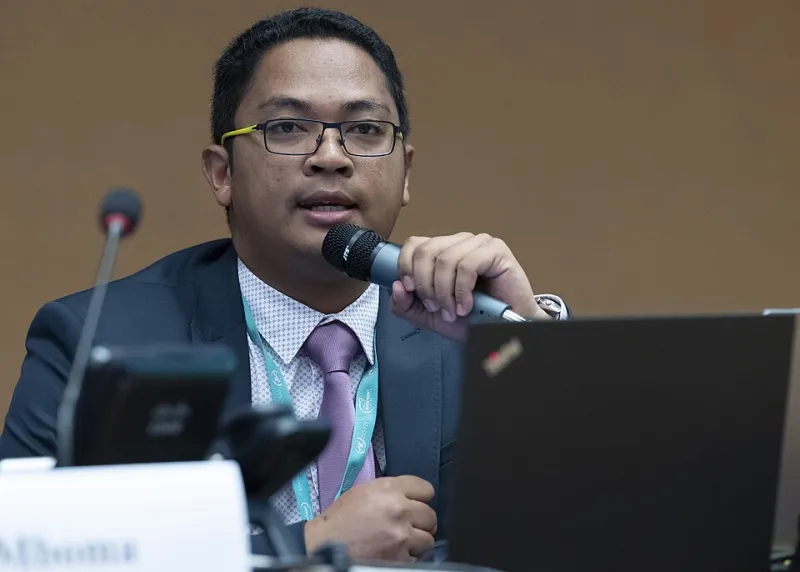
Photo: UNCTAD, CC BY-SA 2.0, via Wikimedia Commons
Ask any seasoned delegate what produced the most valuable conversation at their last global summit, and the answer is almost never a keynote. It is a corridor exchange, a shared elevator ride to the mezzanine, a slow shuffle at the espresso station while a panel resets. The official program fills the calendar; the margins fill the pipeline.
For American executives preparing for this year's conference circuit — whether in Singapore, Davos, or a host city closer to home like Nashville — the discipline worth developing is not agenda optimization. It is margin management.
The 40 Percent Reality
Block out the sessions on any summit schedule and a striking picture emerges: roughly 40 percent of a delegate's day is unstructured. Transitions between rooms. Lunch hours that stretch past what any lunch requires. The twenty minutes after a panel ends while the next audience files in.
Most first-time attendees treat these gaps as dead air to be endured. Veterans treat them as the prime inventory. "I stopped building my summit plan around sessions years ago," says one Chicago-based managing partner who attends three international conferences annually. "I build it around the transitions. That's where the guard comes down."
The logic is behavioral, not tactical. On stage, everyone performs. In the queue for coffee, people revert to being people — tired, candid, curious. A founder who just delivered a talk is far more likely to have a genuine exchange in the hallway five minutes later than in a scheduled meeting booked weeks in advance.
Engineering Serendipity Without the Stink of Calculation
The paradox of the informal encounter is that it cannot be obviously pursued. A delegate who corners a target CEO in an elevator with a rehearsed pitch has converted serendipity into ambush, and the room knows it.
The practitioners who do this well follow a few consistent patterns.
Position, don't pursue. Choose seats near doors rather than the front row. Linger near the room where the person you hope to meet is likely to exit. Stand at the high-traffic node — the coffee station, not the buffet — and let convergent paths do the work.
Ask about the session, not the deal. The natural icebreaker in a transition zone is the content everyone just shared. "What did you make of that last panel?" opens a conversation that can drift toward business without ever announcing itself.
Cap the moment at three minutes. The informal exchange is a seed, not a harvest. Veterans exchange contact information early and move on, protecting both parties' time and leaving the other person wanting more. The follow-up — ideally within twenty-four hours — is where the relationship gets converted.
Bring a wingman sparingly. A colleague can extend a hallway conversation naturally, but a cluster of three or more reads as a delegation and repels outsiders. Solo or paired movement through transition zones consistently outperforms the entourage.
Mapping the Informal Geography
Every venue has them: the pockets where structure dissolves. The lounge between the main hall and the breakout rooms. The coat check at the evening reception. The lobby bar that becomes the de facto annex after 9 p.m.
Experienced attendees walk the venue before the first session, identifying two or three of these nodes and building their day around them. A delegate who knows the keynote lets out at 11:20 and the coffee station sits on the route to the breakout rooms can position themselves for a dozen organic encounters before lunch — no cold outreach required.
The evening programming deserves equal attention. At most international summits, the hosted dinners and receptions are where relationships cross from professional to personal, and the walk back to the hotel afterward — unscripted, unhurried — is where the real candor begins.
The American Blind Spot
There is a cultural dimension worth naming. US executives, raised on calendars and ROI language, tend to over-schedule their summit time and under-invest in the open blocks. Delegations from markets where relationship-building carries more formal weight — much of Latin America, the Gulf, parts of Asia — often treat the unstructured hours as the main event, and the sessions as the backdrop.
American founders who internalize this shift consistently report better outcomes. The meeting that matters may not be the one on your calendar. It may be the one you don't see coming, in a corridor you happened to be standing in.
The lesson for this year's summit season is simple: read the agenda, certainly. But study the gaps between it. That is where the conference you actually attended will have taken place.