Solo at the Summit: Why the Unattached Badge Outperforms the Entourage

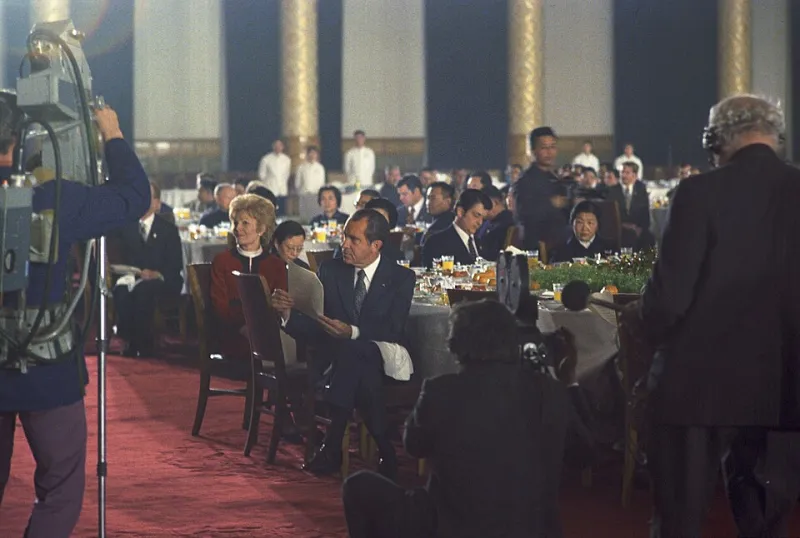
Photo: Alexfloros, CC BY-SA 4.0, via Wikimedia Commons
Walk the concourse at any major global business summit and you will notice a pattern within the first ten minutes. The delegations move in packs — matching lanyards, a senior figure at the center, aides managing the perimeter. They are easy to spot, and that is precisely the problem. Meanwhile, the person who actually books the most meetings this week may be the one standing alone at the coffee station with no ribbon on their badge at all.
The majority of attendees at international summits are not backed by a government trade mission or a Fortune 500 contingency budget. They are founders, independent operators, boutique advisors, and mid-market executives who paid their own way, flew economy or Premium Select, and answered to no one but their calendar. Conventional wisdom treats this as a handicap. The evidence suggests otherwise.
The Entourage Tax
Delegations confer status, but they also confer friction. Every meeting a delegation principal takes must be routed through protocol, briefed in advance, and balanced against the political sensitivities of the group. A delegate representing a state-backed mission cannot always say what they are thinking, commit capital on the spot, or pivot a conversation toward an opportunity nobody scheduled.
The unattached attendee labors under no such constraints. They can hear a pitch at 2 p.m. and have a term sheet conversation by dinner. They can sit down with a competitor's supplier without triggering a diplomatic headache. In a setting built for trust-intensive transactions, agility is currency — and the lone operator holds the most of it.
Consider the pattern among American founders who have worked recent summit cycles. Several bootstrapped SaaS founders from Austin and Denver report that their highest-value meetings came not from official programming but from hallway conversations where, freed from a corporate script, they could simply be candid about what they needed. One mid-market manufacturer from Ohio described the dynamic bluntly: the delegations were busy performing for each other, while the independents were doing business.
Access Is a Skill, Not a Ribbon
The honest objection is that unattached attendees lack built-in access — the reserved lounges, the delegation dinners, the introductions that arrive pre-warmed. That objection is real, but it is answerable, and the answer is preparation rather than pedigree.
The operators who thrive solo treat the summit as a campaign, not a trip. Weeks out, they map the attendee list, identify twenty or thirty priority contacts, and request meetings directly — often succeeding precisely because they are not routed through a handler. They arrive with a one-sentence description of what they do and what they are looking for, which paradoxically makes them easier to help than a delegation principal whose interests are opaque. And they volunteer: moderating a roundtable, staffing a country pavilion's open session, or hosting a small breakfast. Contribution buys standing that no ribbon can.
There is also a subtler advantage. Delegation members are often committed to their colleagues' agendas for the full run of the event. The solo attendee can abandon a failing conversation, chase a lead across the venue, and stay late for the informal gatherings where, as this publication has argued before, much of the real deal-making happens away from the main stage.
A Working Playbook for the Lone Badge
For executives considering the unattached route at the next summit season, the playbook is consistent across those who have done it well:
- Book meetings before you book flights. The badge is an expense; the calendar is the asset. Securing eight to twelve confirmed meetings in advance transforms the event from a lottery into a schedule.
- Adopt a specific mission. "Exploring partnerships" reads as noise. "Seeking a Midwest distribution partner for cold-chain logistics" invites introductions. Specificity makes you referable.
- Host something small. A table of six at a nearby restaurant, invitation-only, positions an independent as a convener rather than a supplicant. The cost is trivial; the positioning is not.
- Debrief within seventy-two hours. Solo operators win on follow-through. Without a delegation debrief to wait for, there is no excuse for letting momentum die in the week after the lights go down.
The Contrarian Case, Stated Plainly
None of this is to dismiss delegations outright — for market-entry diplomacy and high-level relationship signaling, they remain unmatched. But for the American founder, the independent investor, or the mid-market executive weighing whether a summit is "worth it" without institutional backing, the honest answer is that going unattached may be the sharpest way to attend.
The summit floor rewards whoever can move fastest, speak most candidly, and follow up first. On those terms, the badge with no ribbons attached may be the most valuable credential in the building.