Budgeting for Babel: The Line Item Most Delegations Cut — and Regret
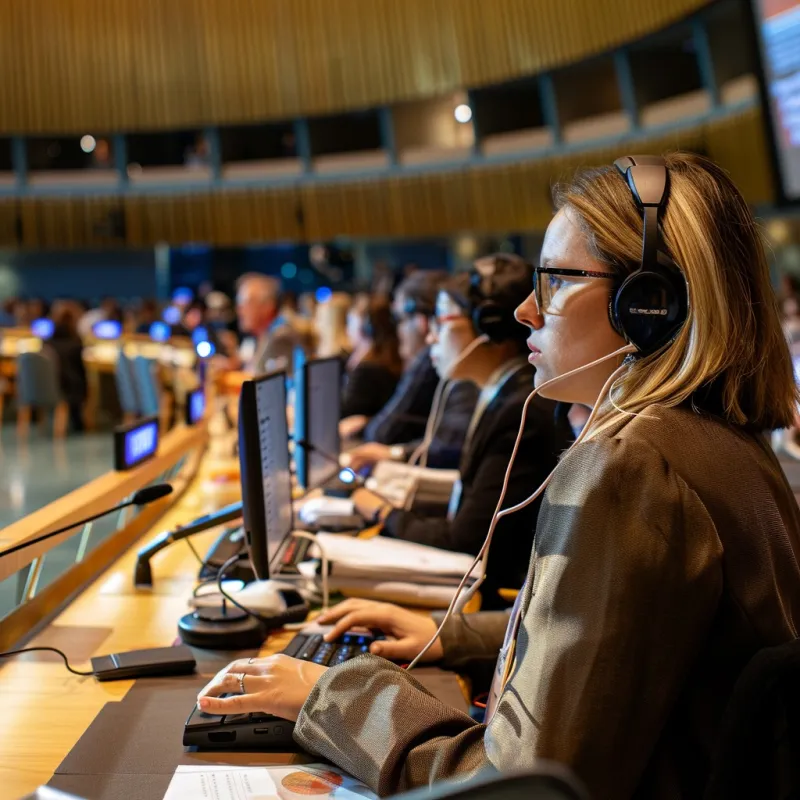
Photo: business interpreter headset international conference negotiation, via images.stockcake.com
When a mid-sized manufacturing delegation from Ohio flew to a Southeast Asian trade summit two years ago, the budget spreadsheet looked airtight: flights, hotel, booth fees, even a line for client dinners. What was missing was a single dollar for professional interpretation. The team leaned on a bilingual employee from the shipping department, a well-meaning gesture that cost them a distribution partnership they spent eighteen months trying to recover.
That story is not an outlier. Across American boardrooms, language and culture support remains one of the most consistently underestimated expenses in international summit planning — and one of the most consequential.
The Invisible Layer of Deal-Making
Summit programming — keynotes, panel seats, curated networking sessions — gets planned months in advance. The operational layer that makes those moments land across language barriers often gets decided in the final week, usually by whoever can be found on short notice.
The problem is structural. Interpretation does not produce a visible asset the way a booth or a branded dinner does. Its value only becomes apparent in its absence: the misread clause in a term sheet, the joke that landed as an insult, the negotiating pause that was actually a refusal.
"An interpreter isn't overhead," says one Chicago-based logistics executive who now budgets six figures annually for language services. "It's the plumbing. You only notice it when it fails, and by then the floor is flooded."
What Cutting Corners Actually Costs
Executives who have skimped describe a familiar pattern. First, a bilingual staffer is pressed into service — usually someone fluent but untrained in simultaneous interpretation, negotiation terminology, or the cultural subtext of business dialogue. Second, small frictions accumulate: conversations slow down, nuance drops out, rapport stalls. Third, the deal quietly moves to a competitor whose delegation arrived with professionals.
The financial math is stark. A certified conference interpreter typically costs between $700 and $1,500 per day, plus preparation fees for technical material. A lost cross-border partnership, by contrast, is routinely valued in the millions. Even a single botched negotiation can dwarf a decade of language services spending.
Cultural missteps compound the problem. In many markets, directness reads as disrespect; in others, hesitation reads as weakness. A localization consultant's job is to brief the delegation on those dynamics before the first handshake, not to explain them afterward in a post-mortem email.
Building the Line Item Correctly
Delegations that get this right treat language and culture support as a planning discipline, not a procurement errand. A practical framework:
- Audit the language exposure. Map every touchpoint — negotiation sessions, booth conversations, media availability, dinners — and identify which require interpretation, which require translation of materials, and which require neither.
- Hire specialists, not generalists. Conference interpreting, legal interpretation, and marketing localization are distinct crafts. A court-certified interpreter may be the wrong fit for a fast-moving networking floor.
- Budget preparation time. Professionals charge for briefing on your industry, your products, and your counterpart's business culture. Build that into the engagement rather than expecting it for free.
- Include cultural briefing for the whole team. A two-hour session before departure costs less than one lost dinner conversation and pays dividends in every interaction.
- Plan for contingency. One interpreter can fall ill. Build redundancy into the schedule for critical sessions.
A Shift in Executive Mindset
The encouraging trend is that leading American delegations are changing their sequencing. Rather than booking flights first and scrambling for language support last, sophisticated teams now lock in interpretation and cultural briefing before travel is confirmed — treating the team as a precondition of the trip, not an accessory to it.
At this year's Global Business Summit programming, several sessions on cross-border negotiation touch on the same theme from the stage: the deals that close across borders are rarely won by the loudest pitch. They are won by the delegation that understood the room.
And understanding the room, increasingly, is a budgeted profession.