The Quiet Fixers: How Cultural Brokers Became the Most Coveted Access Pass at Global Summits
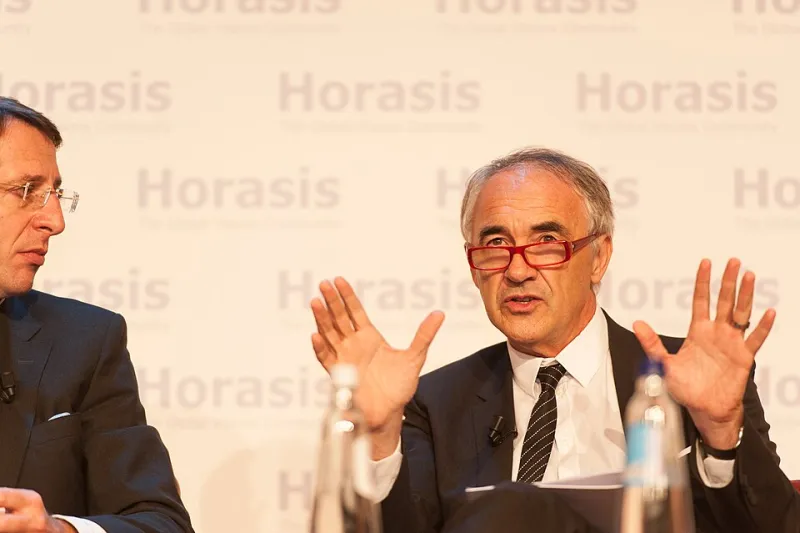
Photo: Richter Frank-Jurgen, CC BY-SA 2.0, via Wikimedia Commons
The most valuable person at last year's international trade summit in Singapore was not on stage. She was not a keynote speaker, a Fortune 500 chair, or a government minister. She was a former diplomat turned commercial advisor who, over the course of three days, introduced a Midwestern manufacturing executive to two Vietnamese distributors, defused a pricing misunderstanding before it killed a partnership, and explained — quietly, over coffee — why her client's handshake-heavy negotiating style was reading as aggressive to his counterparts.
Her fee, by most accounts, rivaled the cost of the entire trip.
A new professional class is consolidating around the global conference circuit, and American executives who ignore it do so at their own expense. Call them cultural brokers, cross-border fixers, or deal translators: these are multilingual professionals who sell not language, but context. And as summits draw increasingly international delegations, demand for their services is outpacing supply.
What Apps Cannot Translate
Machine translation has collapsed the language barrier to near zero. What it has not collapsed is the meaning barrier. An app can render a Japanese supplier's polite deferral into English; it cannot tell you that the deferral is a rejection, or that pushing again will burn a relationship that took three years to build.
Cultural brokers operate in that gap. Their work spans several functions that no software currently replicates:
- Norm translation. Explaining how decisions actually get made in a counterpart's organization — whether the person across the table can say yes, or is merely relaying messages upward.
- Pacing guidance. Flagging when a US-style direct close will land as pressure, and when patience signals seriousness rather than hesitation.
- Network brokerage. Making warm introductions that carry weight because the broker's reputation is attached to them.
- Repair work. Catching small frictions — a misread joke, an unintended slight, a misinterpreted silence — before they compound into stalled negotiations.
For executives accustomed to efficiency as a virtue, the broker's value proposition can sound abstract. It is not. A single misread signal at an international conference can cost a company a market entry measured in years. Brokers are, in effect, insurance policies against the most expensive category of business mistake: the one nobody realizes they made until the deal quietly dies.
A Cottage Industry Goes Professional
The profession's roots are informal — retired foreign service officers, bilingual MBA graduates, consultants who spent decades shuttling between headquarters and overseas markets. What has changed is the packaging. A growing number now operate as formal practices, with retainers, confidentiality agreements, and pre-conference briefing sessions that resemble executive coaching engagements more than freelance translation.
Demand is being driven from both directions. International delegations arriving at American summits increasingly retain their own brokers to navigate US business culture, which they often find as opaque as Americans find theirs. Meanwhile, US founders heading to events in the Gulf, Southeast Asia, and Latin America have discovered that showing up with a respected local advisor changes the calculus of who takes the meeting.
A Framework for Vetting a Broker
For executives considering the investment, the vetting process matters more than the search. The field is unregulated, and quality varies enormously. Four criteria separate credible operators from well-connected generalists.
First, sector fluency over language fluency. Anyone can hire an interpreter. The broker worth retaining has closed or advised deals in your industry and understands the commercial logic on both sides of the table.
Second, bilateral reputation. Ask to speak — separately — with two references from each side of the cultural divide. A broker admired only by American clients is a tour guide with a better title.
Third, clarity on incentives. The best brokers take flat fees or retainers. Those compensated through success fees or undisclosed commissions from the foreign counterpart present a conflict of interest that can poison a negotiation before it begins.
Fourth, a written engagement scope. Serious operators define what they will and will not do: introductions, briefing sessions, meeting facilitation, and follow-up support. Vagueness at the outset becomes ambiguity at the table.
The Compounding Return
The most persuasive argument for retaining a broker is not any single deal. It is the accumulation of judgment. Executives who work with skilled cultural advisors over multiple summits report a measurable shift: they begin internalizing the norms themselves, reading rooms they once needed help decoding.
That is the quiet endgame of the interpreter economy. The best fixers work, in a sense, toward their own obsolescence — transferring a form of commercial literacy that no application has managed to automate. For American companies competing in markets where relationships precede contracts, that literacy may be the most undervalued executive skill of the decade.