The Cheaper Room Across the Street: What Off-Block Booking Really Costs a 2026 Delegation
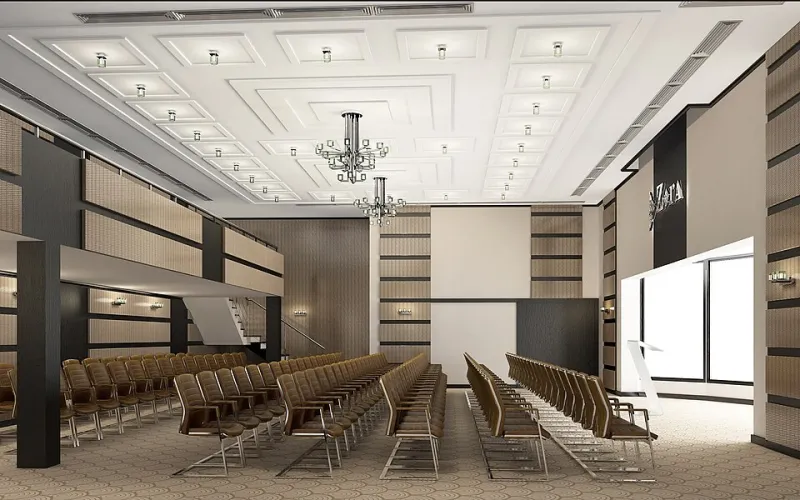
Photo: ZaraHotels, CC BY-SA 3.0, via Wikimedia Commons
Every summit cycle produces the same quiet arithmetic. A delegate opens the official booking link, sees a nightly rate that reads like a car payment, opens a consumer travel app, finds a property three blocks away at 40 percent less, and books it. The decision feels like stewardship. By the second morning of the conference, it usually feels like a mistake.
That is not a moral judgment about thrift. It is a ledger observation. The gap between the block rate and the street rate is real, but it is rarely the gap that survives contact with the final invoice, and it never accounts for what a delegate gives up by sleeping outside the building where the summit actually happens.
The invoice after the invoice
Start with the number most delegates never total. An official block rate at a host property is usually quoted as a single figure that bundles breakfast, in-room connectivity, and access to the summit shuttle. A discounted rate at a property down the street is usually quoted as a room, and only a room.
Add the destination fee, which in most major US convention markets now runs between 25 and 45 dollars a night. Add parking, if the delegate drove or rented, at 30 to 60 dollars. Add the business-grade wifi upgrade, the breakfast that was included at the host hotel and now is not, and the two rideshare trips a day that replace a shuttle loop. In the ranges we reviewed for 2026 planning, a 259-dollar room at a nearby property lands within 40 dollars of a 389-dollar room in the block, and sometimes above it.
The pattern is consistent enough to function as a rule: the widest rate gaps appear at properties that unbundle the most. The cheapest headline rate is almost always the one with the longest fee schedule attached.
Attrition is a group problem that lands on individuals
Room blocks are contracts, and contracts have floors. Host organizations typically commit to filling a percentage of the block, commonly 80 to 90 percent, and agree to sliding-scale damages if the group falls short. Those damages do not disappear. They are absorbed by the host, repriced into next year's contract, or recovered through higher registration fees.
Individual delegates rarely see this clause, which is why off-block booking feels costless. Collectively, it is not. A summit that misses its block by 150 rooms pays for those rooms whether or not anyone slept in them, and the following year's rate reflects it. Sponsors feel the same pressure from a different direction: many sponsorship tiers include a room-block hold, and a sponsor whose attendees book elsewhere can find its pickup number scrutinized when renewal conversations begin.
There is a scheduling dimension as well. A growing number of summits reserve priority for in-block delegates on limited-capacity items, including off-site dinners, closed-door briefings, and the small rooms where the useful conversations happen. The policy is seldom advertised as a reward for booking inside the block. It functions as one anyway.
The fifteen-minute walk that is never fifteen minutes
Distance is the most mispriced variable in summit travel. Three blocks in Chicago in May is a pleasant stroll. The same three blocks in a Houston downpour, or at 10 p.m. after a reception, or in the wrong shoes on a convention-center escalator system, is a different proposition entirely.
Then come the shuttle gaps. Loops typically run every 20 to 30 minutes during peak hours, thin out in the afternoon, and stop before evening functions held off-property. A delegate who books outside the block frequently discovers that the return trip after the closing dinner is a 28-dollar rideshare rather than a shuttle, and that the shuttle that does exist deposits everyone at a single stop, often the far end of the host hotel.
There is a quieter cost as well: the badge. Registration desks at most summits sit inside the host property, and credential pickup, speaker check-in, and the replacement of a lost badge all happen there. Every one of those errands becomes a trip.
What the lobby is actually selling
The official room block is not primarily a hotel product. It is a proximity product, and the proximity carries a market value that never appears on a rate sheet.
The most productive hour at a summit is usually not a session. It is the forty minutes before the first one, when a few hundred people in the same business are drinking indifferent coffee in the same room. It is the elevator. It is the bar at 9:40 p.m., when a panel has just ended and everyone who cared about it is still in the building. Delegates who stay in the block are inside that circulation by default. Delegates who stay elsewhere arrive at the session and leave after it, and the summit becomes a series of appointments rather than a place they were.
None of this is measurable, which is precisely why it loses to a rate comparison at the moment of booking.
A short framework before you book outside
Five questions, answered in writing, will settle most of these decisions:
- Is the badge desk, or any session before 8 a.m., located at the host property?
- What is the all-in nightly rate at the alternative, including destination fees, parking, wifi, and breakfast?
- Does the shuttle run after the last evening function, and does it stop near the alternative?
- Does your company hold a sponsor or exhibitor room commitment that your booking would count toward?
- What is the alternative's cancellation window compared with the summit's own refund policy?
If the answers leave the alternative at parity, the block is the better purchase. If they leave it 80 dollars a night ahead, book outside, but keep the final night in the block, when the closing reception and the informal debriefs do the most work.
The bottom line
Budget season rewards the visible number. Summit season rewards the room key that opens the right elevator. For 2026 planning, the useful discipline is not to chase the lowest rate but to total the highest-value stay: the one whose fees, transport, and geography leave a delegate in the room where the summit is actually happening.