Ten Things the AV Crew Wants Every Keynote Speaker to Know Before the Doors Open
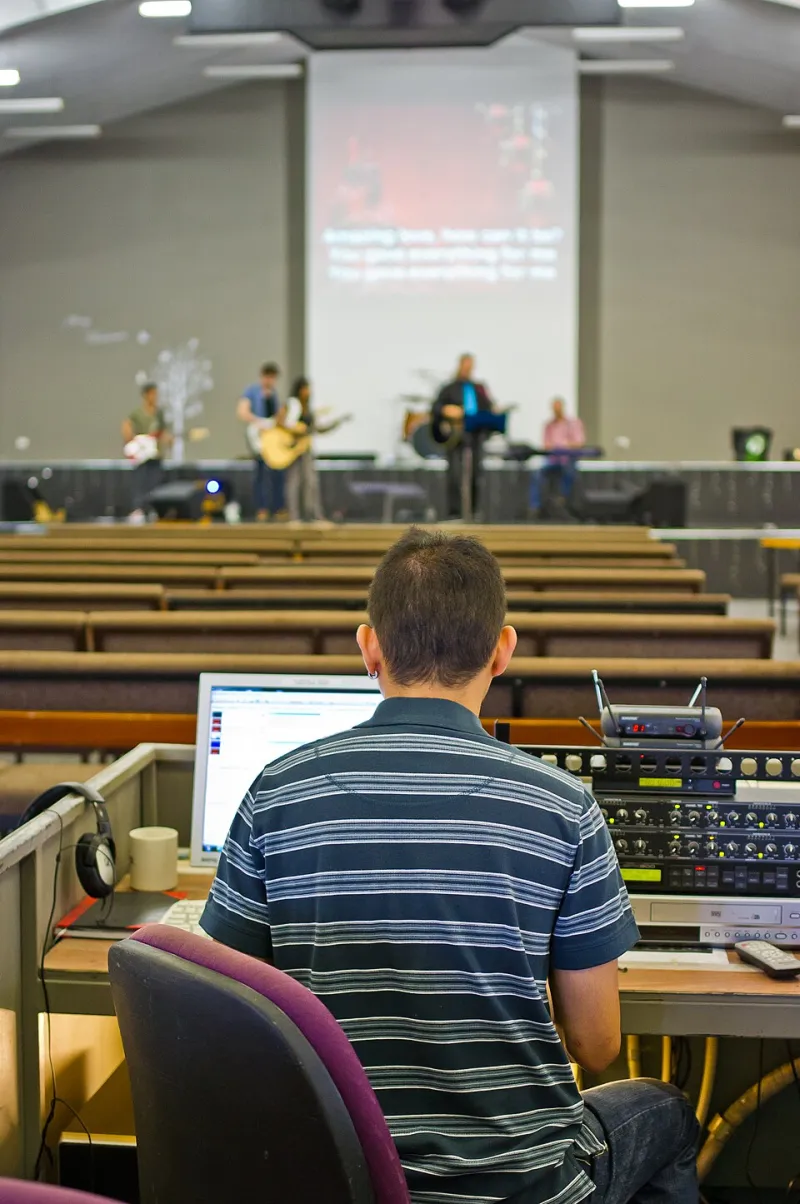
Photo: John Robert McPherson, CC BY-SA 4.0, via Wikimedia Commons
From the front row, a keynote looks like rhetoric. From the wings, it looks like cable. Someone has to tape a microphone to a shirt, find a slide deck on a laptop that went to sleep, and decide what to do when the handheld cuts out twelve minutes into a twenty-minute address. The crew rarely gets a credit line and almost always knows exactly why a session worked.
What follows is the short list those teams would hand to every executive speaker if the green room had a wall big enough for it.
1. The microphone is live before you think it is
Sound checks end, but the channel does not close. Crews routinely hear green-room conversation, pre-show banter, and the occasional candid assessment of a competitor broadcast into an empty ballroom. Assume the room is live from the moment the transmitter is switched on, because technically it is, and stage managers are not always in a position to warn you.
2. Lav placement is a wardrobe decision
A lapel microphone performs at the mercy of fabric. Silk transmits rustle, stiff collars transmit scrape, and a lanyard worn over a lav produces a dull thud every time it swings. Dark, matte, structured shirts are forgiving; heavy jewelry is not. If the crew asks you to move a pocket square or drop a necklace in a bag, that is not vanity policing. It is audio engineering.
3. Never tap, blow, or ask whether it is on
The three gestures that open more keynote sessions than any other, all of them unnecessary. Tapping produces a low boom through the house system. Blowing sounds exactly as unprofessional as it looks. Asking the audience whether the microphone is working invites a reply you cannot hear. Say your first line instead. The crew is already listening, and they will fix whatever needs fixing.
4. The confidence monitor is not a teleprompter
The screen at the edge of the stage shows the current slide and the next one, not a script. Speakers who read from it turn their faces away from the audience and lose the room in the first ninety seconds. Use it to confirm the slide advanced. Trust that the deck you sent two days ago is the deck in front of you.
5. Send the deck 48 hours out, and bring your own adapter
A file delivered four minutes before the doors open is a file that will run without embedded video, with the wrong fonts, or with the animations stripped out to make it load. Send it early. Then carry the adapter for your own laptop anyway, because the one thing a production team cannot promise is that the cable in the room matches the port on your machine.
6. Water, no ice, and the two-sip rule
Ice-chilled water constricts the throat and undermines the voice you spent the morning warming up. Room-temperature water, a glass rather than a bottle, and two sips before you begin is the whole protocol. Take the water off the podium before you start speaking into it; condensation and a live handheld do not mix.
7. Walk the stage in the shoes you will wear
Every main stage has a hot spot where the front lights blind the speaker, a seam in the carpet that catches a heel, and a cable ramp that is obvious from the wings and invisible from the center. Five minutes of walking the platform, in the actual shoes, turns all three from hazards into landmarks. It also tells you where your hands can rest without knocking over a screen.
8. The green room is a live room
Speakers tend to treat the green room as private, which is understandable and incorrect. Walls are thin, doors are propped open for cueing, and the crew's comms channel runs through the corridor. Rehearse your opening sentence out loud somewhere else. Save the strategic asides for the car.
9. Q&A is a logistics problem
Audience questions fail for reasons that have nothing to do with the answers. Microphone runners cannot reach the third tier quickly, a question from the back of the room is unintelligible on the recording, and an audience member who stands up to make a speech will consume four minutes. Repeat every question into your own microphone before answering it. It solves the audio, the transcript, and the filibuster at once.
10. The wrap cue is a contract
The hand signal from the wings means the session is over, not that it is nearly over. There is a screen going up, a sponsor holding a slide, and a next session loading in behind the curtain. The speaker who acknowledges the cue and lands the final sentence is remembered as disciplined. The one who adds a closing thought, then another, is remembered by the production team for the rest of their careers.
What the crew remembers
The crews who build these stages are not the audience and are not the critics. They are the closest thing a speaker has to a mirror, because they see the whole thing: the rehearsal nobody attended, the slide deck sent at the last hour, the handheld gripped correctly, the question repeated clearly, the cue honored. Executives spend considerable sums on messaging and comparatively little on the ninety seconds of microphone discipline that decides whether the messaging arrives intact. The good news is that almost everything on this list takes minutes to fix, and the crew will notice that you did.