Davos in the Heartland: The Case for Taking Global Summits Off the Coasts

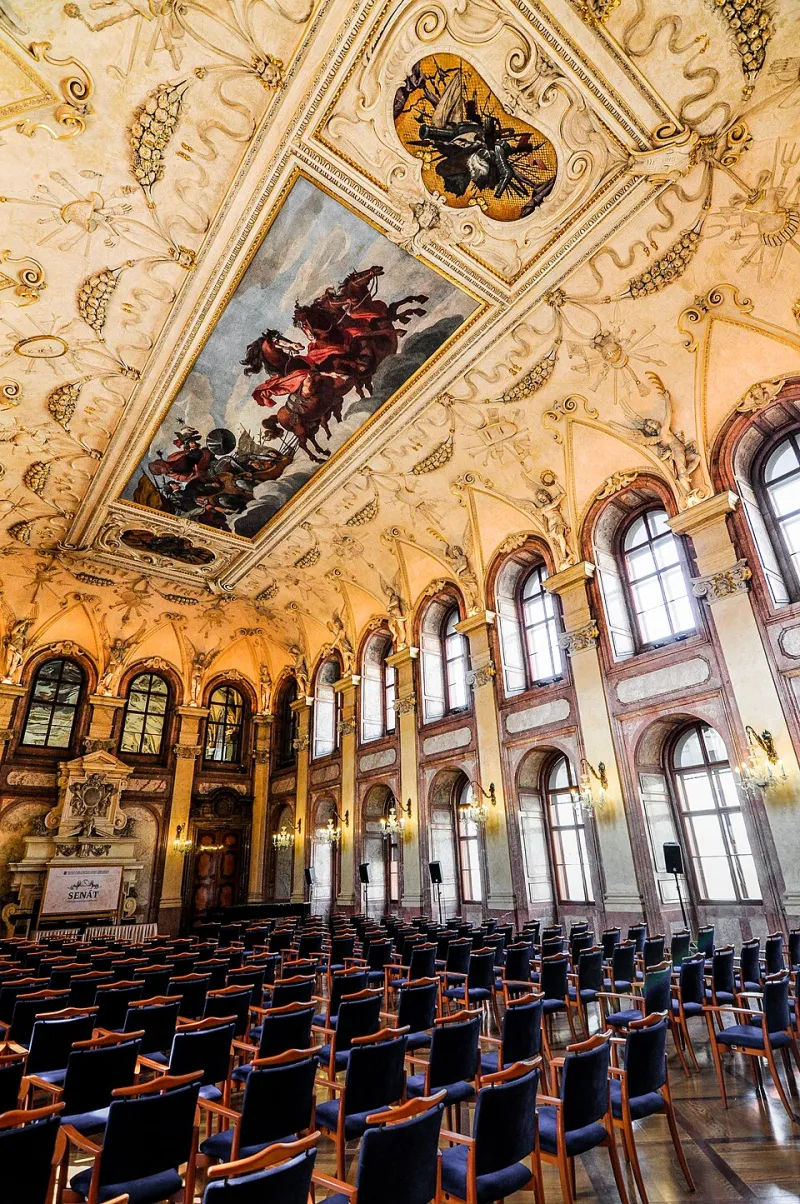
Photo: Huangdan2060, CC BY 3.0, via Wikimedia Commons
For decades, the geography of American business convening has been settled by habit. The marquee summits land in New York, San Francisco, Miami, and Washington. Everything else, the assumption goes, is regional filler.
That assumption is quietly eroding. A growing share of international delegations visiting the United States are choosing to convene — and to be convened — in mid-market cities far from the traditional conference corridors. Columbus, Kansas City, Nashville, Indianapolis, and Raleigh-Durham are among the beneficiaries, and the shift says something important about where the economics of global dealmaking are heading.
The Cost Curve Cuts Both Ways
The arithmetic is straightforward. A five-day executive program in Manhattan or the Bay Area routinely produces per-attendee costs that would have seemed fanciful a decade ago, with hotel rates alone often exceeding what an entire registration once cost. For international delegations sending five or ten representatives, the difference between a coastal host city and a mid-market alternative can fund an entire additional delegation member — or two.
But cost is only the opening argument. Mid-market host cities are competing on logistics, and in several respects they are winning. Airports like Columbus's John Glenn International and Raleigh-Durham offer direct connections to major European hubs without the ground-transportation friction of larger metros. Venues sit twenty minutes from hotels, not ninety. Delegates spend their time in sessions and meetings rather than in transit.
There is also a softer variable that hosts have learned to market: receptivity. Delegation leads from Europe and Asia consistently report that mid-market American cities offer a degree of institutional attention — governor's office engagement, university partnerships, local business leadership at the table — that larger metros reserve for only the largest events. In a city of two million, a visiting delegation is news. In a city of twenty, it is a Tuesday.
The Incentive Game
State and municipal economic development offices have noticed the pattern, and several have begun treating summit hosting as a form of export promotion. The playbook includes subsidized venue costs, coordinated visa support letters — a persistent pain point documented across the international conference circuit — curated matchmaking programs pairing visiting delegations with local suppliers, and post-event follow-up infrastructure that treats a summit not as a three-day event but as the start of a multi-year business development pipeline.
For a mid-sized city, the return can be substantial: foreign direct investment leads, sister-city commercial relationships, and a durable reputational upgrade on the international stage. For visiting executives, the effect is a host community that is structurally motivated to make connections happen.
What It Means for Founders Choosing Where to Go
For American founders allocating a finite conference budget, the rise of heartland summits changes the calculus in three practical ways.
First, the ratio of access to competition improves. At saturated coastal events, an emerging founder competes with thousands of peers for a handful of delegations' attention. At a well-organized regional summit with a genuine international roster, the same founder may be one of a few dozen relevant local companies in the room.
Second, delegations are increasingly bilateral by design. Mid-market summits often structure their programming around specific trade corridors — a Midwest event focused on European advanced manufacturing partnerships, a Southeast gathering built around Asia-Pacific logistics. That focus produces higher-intent meetings than the general-purpose mega-conference format.
Third, the objection that mid-market cities lack deal flow is aging poorly. The companies headquartered in Nashville, Columbus, and Indianapolis collectively represent an enormous base of potential customers and partners, many of whom rarely attend coastal events and therefore have unfilled calendars.
A Correction, Not a Replacement
None of this means Davos, or its American coastal analogues, are finished. Scale has its own gravity, and the largest gatherings will retain their pull for years to come. But the monopoly is broken. The next decade of American summit-hosting will likely be more geographically distributed than the last, driven by delegations that want lower costs, faster logistics, and hosts with something to prove.
Founders who wait for the map to finish redrawing will find that the best rooms filled first — and that this time, the rooms were in the middle of the country.