Heartland Host Cities: How Cleveland, Nashville, and Columbus Outmaneuvered the Coasts for Global Summits

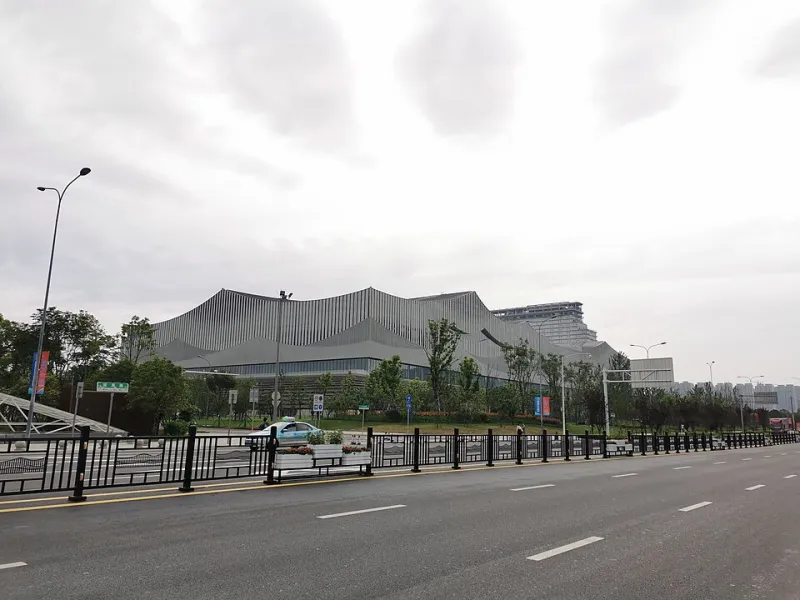
Photo: MNXANL, CC BY-SA 4.0, via Wikimedia Commons
When organizers of a major international trade summit began evaluating host cities for its 2027 edition, the shortlist raised eyebrows across the conference industry. New York was there, as expected. So was Miami. But sitting alongside them were Columbus, Ohio, and Nashville, Tennessee — two metros that a decade ago would not have survived the first round of deliberations.
They won anyway. And they are not outliers.
The Bid Book Has Changed
The formal bidding process for a global summit resembles a municipal IPO: cities submit detailed proposals covering venue capacity, hotel inventory, ground transportation, security posture, and — increasingly — the strength of the local business community's financial commitment.
Coastal capitals still excel on the first two counts. Where they falter is cost and friction. A convention-grade venue in Manhattan can run two to three times the nightly rate of a comparable facility in Columbus, where the Greater Columbus Convention Center anchors a downtown that has been aggressively redeveloped for exactly this kind of traffic. Add in union labor rates, permitting timelines, and the political sensitivities that now attach to hosting international delegations in high-profile coastal cities, and the calculus shifts quickly.
Host committees in mid-sized metros have learned to weaponize this gap. Their bid books emphasize predictability: shorter motorcade routes, single-campus venue layouts, and city governments eager rather than ambivalent about the international spotlight.
Nashville's Playbook: Culture as Collateral
Nashville's rise as a summit city is the most instructive case study. The city's convention authority has spent the past several years courting international organizations with a pitch that blends practicality with unmistakable appeal — the Music City Center's expandable exhibit space, a dense walkable entertainment district for after-hours networking, and direct international flights through a steadily expanding BNA route map.
What Nashville understood early is that summit organizers are not merely booking square footage. They are selling an experience to attendees who can choose to stay home. A host city that doubles as a destination reduces the organizer's registration risk, and organizers know it.
Cleveland and the Loyalty Dividend
Cleveland's bid strategy has rested on a different pillar: institutional memory. The city's host committee — the same civic machinery that successfully staged the 2016 Republican National Convention — retains institutional relationships with federal security agencies, hotel operators, and regional corporate sponsors that newer host cities spend years building.
That loyalty dividend matters when an international organizer needs a host committee that can absorb a surprise, whether a delegation change or a weather event. Cleveland's corporate base, anchored by healthcare and advanced manufacturing multinationals, also supplies something coastal cities often lack: executives with genuine operational ties to the delegations attending.
What Executives Should Watch
For American leaders planning their conference calendars, three practical implications follow.
First, watch the announcement cycle. When a summit announces a mid-continent host city, early-bird registration and hotel blocks fill faster than they do in oversupplied coastal markets, where late commitments are easier to accommodate.
Second, reconsider the delegation economics. Sending a leadership team to Columbus rather than Manhattan can cut per-executive costs by 30 to 40 percent, according to convention industry benchmarks — savings that translate directly into larger delegations or longer stays.
Third, pay attention to the programming itself. Summits in emerging host cities often build site visits and regional partner showcases into their agendas, offering access to manufacturers, health systems, and logistics operators that a Manhattan ballroom simply cannot replicate.
The Coastal Response
None of this means New York or Miami is retreating. The largest summits still prize the signaling value of a coastal stage. But the bidding war has genuinely broadened, and organizers now treat mid-sized American cities as first-tier options rather than consolation prizes.
For the executives who move early, the heartland hosting boom represents more than a cheaper hotel room. It is earlier access, better positioning, and a front-row seat to the corridors where the next wave of international dealmaking is quietly taking shape.