The Queue Before the Keynote: Turning Registration Dead Time Into Your First Deal Pipeline
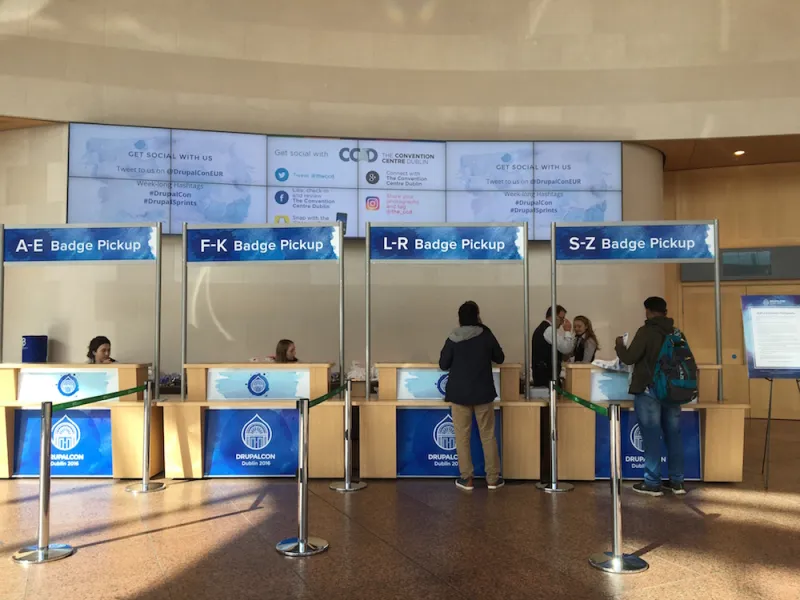
Photo: business conference registration desk badge pickup line attendees, via events.drupal.org
The registration line at a major global summit is one of the few places all week where hierarchy briefly dissolves. A Fortune 500 division president, a Series B founder from Austin, and a trade ministry official from Southeast Asia stand shoulder to shoulder, all waiting for the same laminated badge. Yet most delegates treat this hour as dead time to scroll through — a logistical toll to pay before the real conference begins.
Organizers and veteran attendees see it differently. The arrival queue, they argue, is the most underpriced networking asset on the agenda.
Why the Line Outperforms the Lounge
Formal networking sessions come loaded with expectations. Everyone arrives with a rehearsed pitch and a mental checklist of targets. The registration queue, by contrast, is low-stakes by design. Nobody is trying to impress anyone yet. Conversations start from a shared, slightly absurd condition: standing in line.
"The barrier to entry is the weather complaint," says one longtime programming director for a US-based international trade conference. "From there it's a thirty-second hop to 'so what brings you to the summit?' And unlike a breakout session, the person next to you hasn't been pre-sorted by industry track. It's the only random sample you get all week."
There is also a timing advantage. Arrivals are mentally fresh, calendars are still uncluttered, and the crucial meetings of the week have not yet been claimed. A connection made at badge pickup can be converted into a coffee slot before the schedule fills.
The Pre-Registration Window: Organizers Weigh In
Summit operators have noticed that arrival-day logistics shape the tone of the entire event. Many now offer staggered pre-registration windows the evening before opening day, often paired with a hosted welcome reception.
The strategic takeaway for delegates is straightforward: early badge pickup is not merely a convenience — it is a separate networking event with its own attendee pool. Delegates who arrive the night before and collect badges at the Sunday evening window routinely report stronger opening-day momentum than those who land at 9 a.m. and sprint to the first keynote.
A few organizer-recommended practices:
- Register the night before whenever offered. The pre-registration crowd skews toward experienced attendees and senior staff — exactly the people worth meeting.
- Skip the mobile badge if the physical line exists. Digital check-in is faster, but it routes you away from the highest-density informal gathering of the week.
- Budget ninety minutes of slack on arrival day. Delegates who schedule flights and hotel check-ins with buffer arrive at the queue relaxed instead of harried — and it shows in the conversations they start.
Hotel Check-In Timing as a Tactical Choice
Where you stay and when you check in quietly determines which queue you join. Attendees at the host hotel tend to meet each other at least twice: once at the front desk, once at registration. That repetition converts a thirty-second exchange into a two-touch familiarity — the minimum threshold for a follow-up meeting to feel natural rather than transactional.
Delegates on a tighter budget face a trade-off. An off-site hotel saves several hundred dollars over a multi-day summit, but it removes the lobby serendipity that American executives have come to treat as part of the registration cost. Some delegations split the difference: junior staff stay off-site while principals book the host property, concentrating senior face time where it counts.
Working the Queue Without Working It
There is a fine line between a warm open and a pitch. Veteran conference-goers describe queue etiquette in blunt terms: read the badge lanyard color, respect the headphones, and never open with business.
The most effective opener, according to delegates surveyed at recent US-hosted summits, is logistical empathy — offering to hold a place, sharing which line is moving faster, or comparing notes on jet lag. From there, a natural exchange of origin stories follows. The ask, if any, comes later, ideally over email that evening while the memory is fresh.
One more rule from the pros: carry nothing you need two hands for. Coffee in one hand is fine. A roller bag and a laptop bag make you unapproachable. Check the luggage, travel light to the queue, and keep one hand free to shake.
The First-Morning Multiplier
The compounding effect of a strong arrival hour is easy to underestimate. A delegate who makes three genuine queue connections on day one enters the opening keynote with familiar faces in the crowd, three warm follow-up emails already drafted, and a social proof boost that colors every subsequent interaction. A delegate who arrives late, badges up alone, and walks straight into a keynote enters the same room as a stranger.
Conferences are won in margins, and the first hour is the widest margin on the agenda. Book the early flight, claim the pre-registration window, and treat the line not as a bottleneck but as the opening session no one printed on the program.