Skip the A-List Scrum: Why Tomorrow's Deals Are Seeded With Today's Mid-Level Delegates
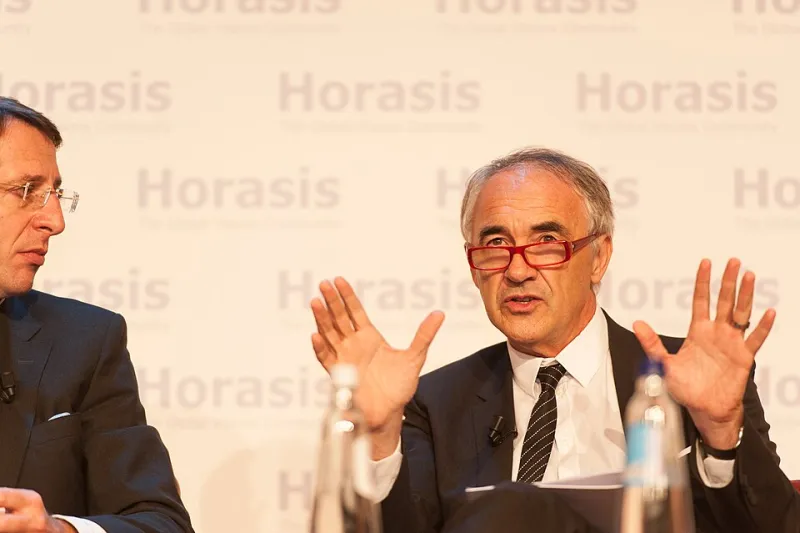
Photo: Jean Tinoco, CC BY-SA 4.0, via Wikimedia Commons
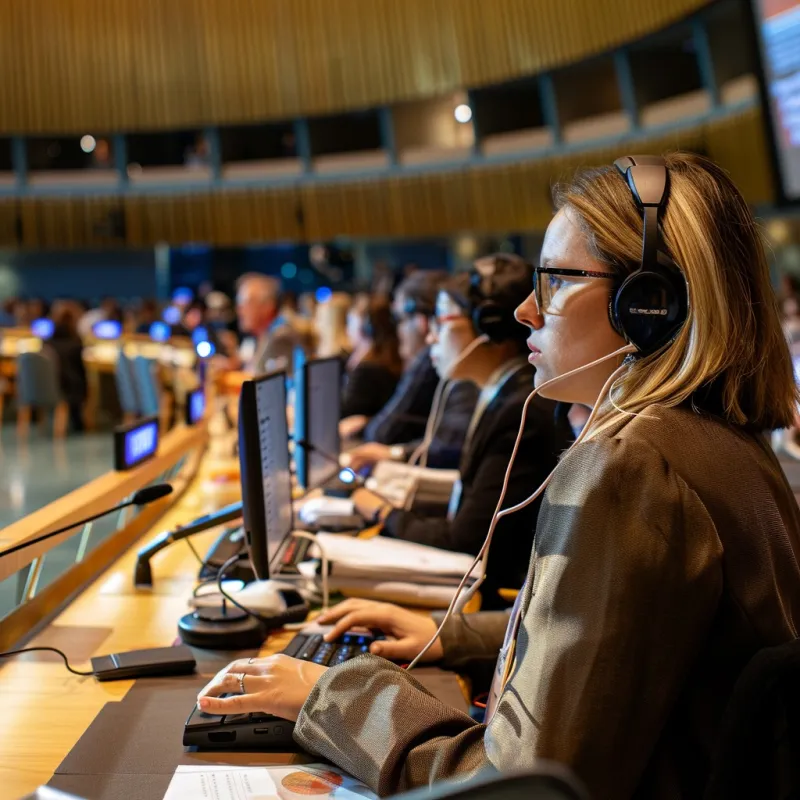
At last year's Global Business Summit, a Chicago-based logistics founder made a deliberate choice: she skipped the invitation-only CEO roundtable and spent the afternoon in a breakout session on port digitization. In that room, she met a 34-year-old operations director from a European shipping group — a name no journalist would recognize. Eighteen months later, that director had been promoted to chief operating officer, and her company had become the anchor client in the founder's transatlantic expansion.
Stories like this are becoming more common, and they point to an uncomfortable truth about summit strategy: the delegate list's most valuable contacts are often not the ones printed in bold on the agenda.
The A-List Illusion
There is a natural gravitational pull toward the top of the org chart. Senior executives carry budget authority, name recognition, and the implied power to say yes. But that same visibility makes them the scarcest resource in the building. A Fortune 500 chief executive attending a three-day summit might have 20 minutes of genuinely open calendar, and hundreds of attendees competing for it.
The result is a scrum — a compressed, transactional exchange in which even a successful introduction yields little more than a business card and a promise to 'have the team follow up.' For most founders, the return on that chase is close to zero.
Mid-level delegates live in a different economy of attention. A director of strategy or a deputy country head may control fewer resources today, but they can offer something scarce in its own right: genuine engagement. Conversations run longer. Follow-ups actually happen. And because fewer people are competing for their time, a thoughtful founder can stand out without a warm intro from a board member.
The Promotion Curve
The core argument for investing in second-tier contacts is temporal. The director you meet this year is frequently the vice president you'll pitch in three years and the chief executive you'll negotiate with in seven. Careers at large organizations move along a predictable curve, and summit attendance is often a leading indicator — companies send their high-potential operators to international events precisely because they are being groomed for bigger roles.
This is what veteran summit-goers sometimes call the promotion curve: the gap between someone's current title and their trajectory. A mid-level delegate with expanding scope, cross-border responsibilities, or a seat on an internal innovation task force is often further along that curve than their business card suggests.
A Framework for Picking Your Targets
Not every mid-level delegate is a rising star, and not every rising star is relevant to your business. Before the summit, American founders can apply a simple three-part screen to the delegate list:
1. Scope trajectory. Look for titles that contain words like 'deputy,' 'global,' 'transformation,' or 'strategy.' These roles tend to sit at the intersection of execution and decision-making — the place where future leaders are grown.
2. Organizational relevance. A brilliant contact at a company with no connection to your market is a friendship, not an asset. Prioritize mid-level delegates whose employers are plausible customers, partners, or acquirers within five years.
3. Investment signals. Companies don't spend five figures sending a mid-level operator across the world for networking alone. Delegation composition is a quiet disclosure of internal priorities. If a firm sends its head of digital infrastructure to a summit focused on emerging markets, that tells you something about where the organization is heading.
Attendees who score contacts on these three dimensions — rather than on title alone — consistently report higher-quality pipelines coming out of international events.
How to Build the Relationship
Identifying a promising second-tier contact is only the opening move. The follow-through is where most attendees falter, and where deliberate operators differentiate themselves.
The most effective approach treats the mid-level relationship as a peer-to-peer exchange rather than a sales motion. Rising operators are solving hard problems with limited resources, and they respond to counterparts who offer genuine insight — a benchmark from the US market, an introduction to a vendor, a candid read on regulatory headwinds. Generosity at this stage costs little and compounds quickly.
Timing matters as well. The thirty days after a summit, when the headline speakers have gone quiet and inboxes have emptied, is the window in which a mid-level contact is most likely to remember — and respond to — a substantive follow-up. A short note referencing a specific conversation, paired with one useful artifact, outperforms any volume of generic outreach.
Finally, resist the urge to escalate too quickly. The value of these relationships is measured in years, not quarters. The founder who asks for a contract in the first quarter of an acquaintance loses access; the one who asks for a coffee on their next trip through town keeps the door open.
The Long Game at the Summit Table
None of this argues for ignoring senior executives entirely. A single well-placed CEO relationship can compress timelines in ways no junior contact can. But for most American founders and small delegations, the arithmetic is unforgiving: the hours spent queued outside a headline speaker's reception are hours not spent in rooms where real relationships form.
Global summits reward attendees who think in decades rather than days. The directors and deputy chiefs walking the halls this year are the decision-makers of the next cycle. Meeting them now — before the title change, before the calendar tightens, before everyone else finally notices — is the kind of asymmetrical bet that defines the best international business relationships.
The badge may say 'delegate.' The trajectory says otherwise.