Empty Chairs, Full Ledgers: What Summit No-Shows Reveal About Real Demand
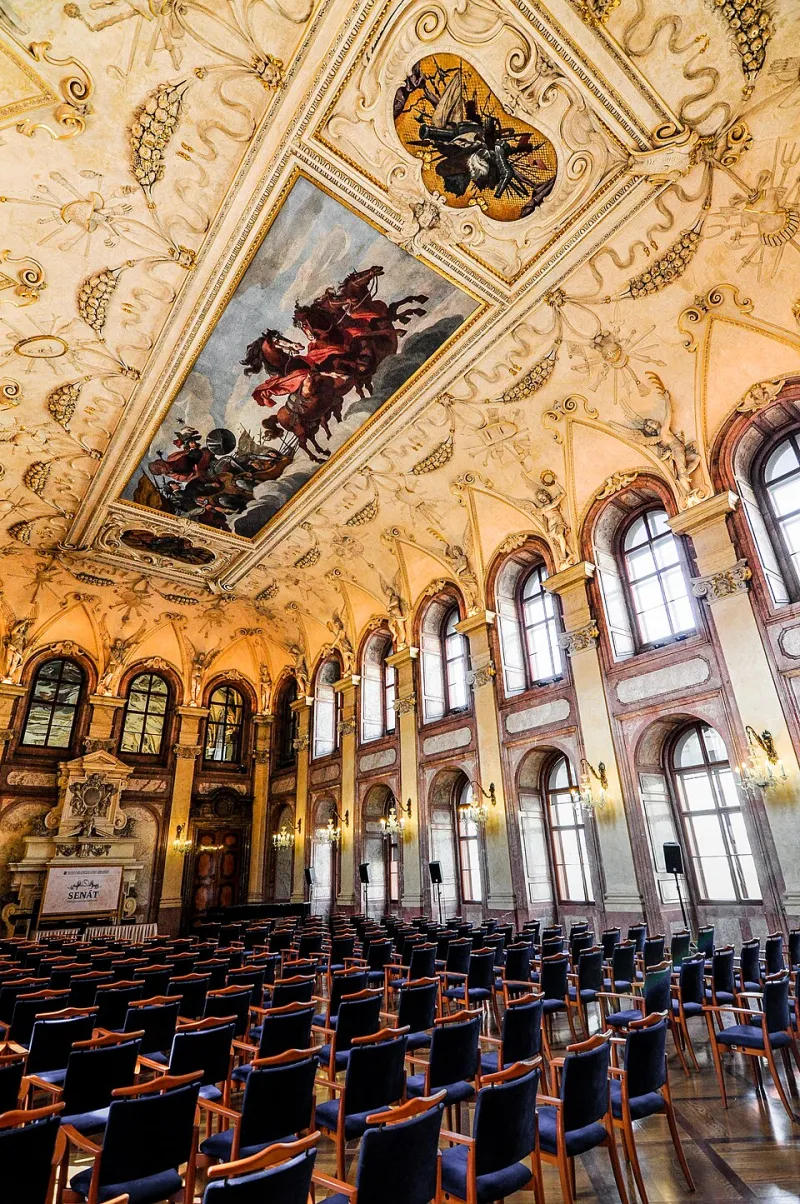
Photo: mendhak , CC BY-SA 2.0, via Wikimedia Commons
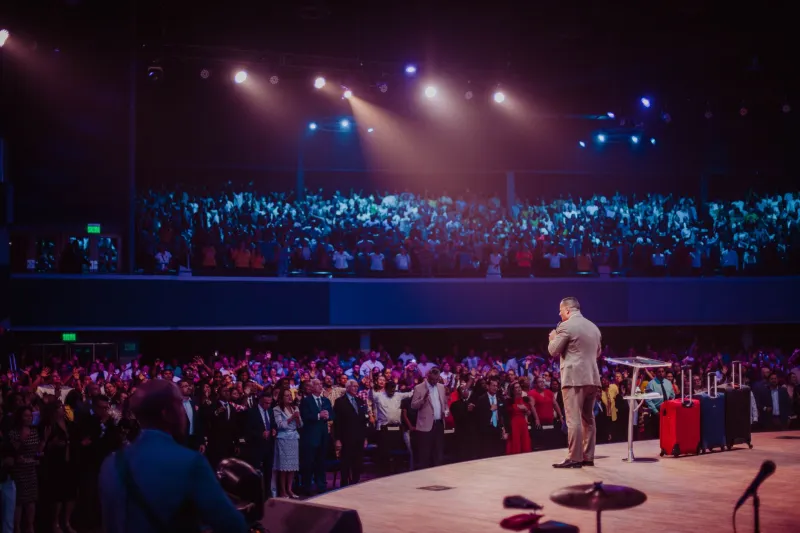
Every global summit has a photography problem. The official images show a packed plenary, delegates leaning forward, a speaker mid-gesture. What no photograph captures is the second row of the third breakout room at 2:15 p.m. on the second afternoon, where four chairs sit empty in a session that was, on paper, fully committed six weeks earlier.
Those empty chairs are not a failure of logistics. They are a data point — and increasingly, they are a business model.
The Chair That Was Paid For Twice
Consider the arithmetic a mid-sized summit runs today. A delegate pass is sold. A badge is printed. A seat is counted against fire code. Catering is ordered and a room is sized. Then the delegate does not appear, because a board meeting moved, a flight was rerouted through a different hub, or a $2,400 registration was quietly written off by an assistant in June.
Under most cancellation terms, the organizer keeps the fee. But the seat cannot be resold once the doors close, and the catering, staffing and floor space were all incurred against a body that never arrived. Meanwhile, that same seat had already been offered to someone on a waitlist.
Here the economics become interesting, and slightly uncomfortable. The organizer has collected revenue for an attendance that did not occur, while simultaneously demonstrating to the waitlist that demand exceeds supply. Scarcity and vacancy are, in this narrow sense, mutually reinforcing.
Scarcity as a Business Model
Deliberate overbooking in the summit business is not the airline business, where a no-show is priced into a spreadsheet with actuarial confidence. It is closer to a subscription held open. Organizers of large programs routinely hold back release blocks — a set percentage of seats withheld from the public allocation and released in tiers as the event approaches.
This is defensible practice. Rooms must be filled; a half-empty keynote reads as a failing event, and a failing event poisons next year's pipeline. But it produces a peculiar distortion: the perceived difficulty of getting in often has less to do with genuine demand than with how a programming committee chose to stage its releases.
What Empty-Chair Rates Actually Disclose
For delegates, the empty-chair rate is one of the few honest diagnostics available. A summit with an aggressive no-show rate — a fifth of committed seats dark by mid-afternoon — is telling you something specific. It suggests that a meaningful share of its attendees were never the decision-makers but the sent: junior staff dispatched to collect intelligence, or corporate seats purchased in bulk to preserve an institutional relationship.
A summit with almost no vacancies in the same rooms is telling you something else, usually that the sessions are chaired by people with the authority to close the doors.
Neither figure appears in the post-event report. Both can be observed directly, without a badge scan.
The Last-Minute Window
For the executive who missed the initial allocation, the no-show premium creates a predictable opening. Two windows tend to matter.
The first opens roughly ten days before the event, when corporate travel approvals clear and the first wave of cancellations lands. Organizers, facing unrecovered catering costs, are most flexible in this period. A polite note to the registration desk — not to the sponsorship team — framed around being available at short notice, occasionally converts.
The second window is less discussed and more useful: the first ninety minutes of any session block. A delegate who arrives early, introduces themselves to the room steward and asks about unreleased seats is often seated where a waitlist applicant could not be. Hospitality staff manage chairs, not databases, and chairs are what actually exist.
Where the Logic Breaks
The case against this system is straightforward. Overbooking as a default punishes the reliable attendee, who books early, pays in full and arrives on time, only to find that the room was sized for a crowd that never materialized. It also inflates reported attendance, because a badge issued is not a badge scanned, and the gap between the two is where a great deal of marketing language lives.
Organizers would argue, reasonably, that any conference with strict capacity discipline and no overbooking buffer would run at visible under-capacity, which damages the product for everyone. There is no clean answer. There is only transparency, which most programs decline to offer.
The Delegate's Advantage
For those who attend, the practical implication is simple. Treat the published program as an intention rather than a contract. Treat sold-out notices as a first data point rather than a closed door. And understand that the empty chair in the second row is not evidence that the summit failed — it is evidence of how the summit is actually priced, staffed and sold.
Read the room, not the brochure. The chairs will tell you which one is the truth.