Inside the Duffel: The Unwritten Gear List of Summit Veterans
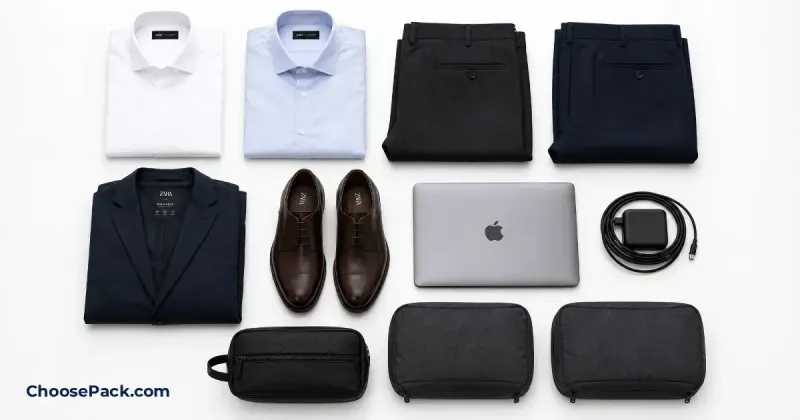
Photo: business traveler packing bag conference essentials flat lay, via cloud-1de12d.becdn.net
The Bag Is a Strategy
Ask a first-time delegate what they're bringing to an international summit and the answer usually involves a laptop, a blazer, and a phone charger. Ask someone who has worked the halls of a dozen global conferences, from Singapore to Toronto, and the answer changes entirely. The gear stops being luggage and starts being infrastructure.
"Every item in my bag has earned its place by saving a deal or rescuing a meeting," says one veteran attendee we spoke with, a supply-chain executive who attends four international summits a year. What follows is a distillation of those interviews — a gear list where every object carries a business rationale.
Connectivity You Don't Have to Negotiate
The single most consistent recommendation: a pocket-sized portable Wi-Fi hotspot, purchased or rented before departure. Hotel and venue networks at major summits buckle under the load of thousands of devices, and the moment you need to pull up a term sheet or join a video call with your home office, you cannot afford to be a hostage of the venue's bandwidth.
Pair that with a dual-currency card or a no-foreign-transaction-fee credit card. Veterans describe the embarrassment — and the lost minutes — of watching a counterpart wait while a card gets declined abroad because a bank flagged the purchase. In a relationship-driven environment, the ten minutes spent on a payment hiccup is ten minutes not spent building rapport. Several attendees now carry a modest amount of local currency for tips, taxis, and the coffee shops that still don't take American Express.
Paper Beats Pixels in a Crowded Hall
Here is the finding that surprises first-timers most: printed one-pagers outperform QR codes in dense conference environments. Hallway Wi-Fi is unreliable, phone batteries die by mid-afternoon, and asking a senior executive to point a camera at a code adds friction to a conversation that should be effortless.
A crisp, well-designed single sheet — company overview, one flagship metric, one clear ask — gets taken, read on the flight home, and passed to a colleague. Veterans print fifty to a hundred, and they report that the physical artifact survives in an office long after a follow-up email has been archived or forgotten.
The Wardrobe Math
Packing for a summit is not packing for a vacation. Veterans describe a three-layer approach:
- One go-to outfit that photographs well, because you never know when you'll end up on a panel photo or in someone's LinkedIn post.
- Comfortable, broken-in dress shoes. Delegates routinely walk eight to ten miles a day on concrete convention floors. Blisters have ended more networking evenings than any scheduling conflict.
- A compact layer or blazer, since ballroom air conditioning in February conventions runs cold regardless of the city.
Etiquette Encoded in Objects
Several items in the veteran's duffel exist purely for cross-cultural courtesy. Business cards remain a formal ritual in much of Asia and the Middle East, and presenting a card one-handed, pulled from a wallet, reads as careless. A dedicated card case signals respect. One attendee carries two stacks — one in English, one prepared for the host region — and notes that the gesture consistently earns a nod of recognition from local counterparts.
A small notebook serves a similar dual purpose. In many cultures, typing notes during a conversation reads as disengaged at best, rude at worst. Handwriting them signals attention.
The Recovery Kit
Finally, the unglamorous layer: a small pouch with medication, blister plasters, a spare charging cable, and a universal power adapter with USB-C ports. Veterans describe summit days as fifteen-hour commitments — breakfast meetings through evening receptions — with no realistic window to return to a hotel room. The delegates who last the full arc of the conference are, quite literally, the ones who packed for it.
The through-line in every interview was the same: preparation at a summit is not about having more things. It's about removing every possible point of friction between you and the conversation that matters. The duffel, packed correctly, disappears — and what's left standing in the hall is just you, ready.