Lost in the Deal Room: How the Interpreter Crunch Is Quietly Reshaping American Hiring
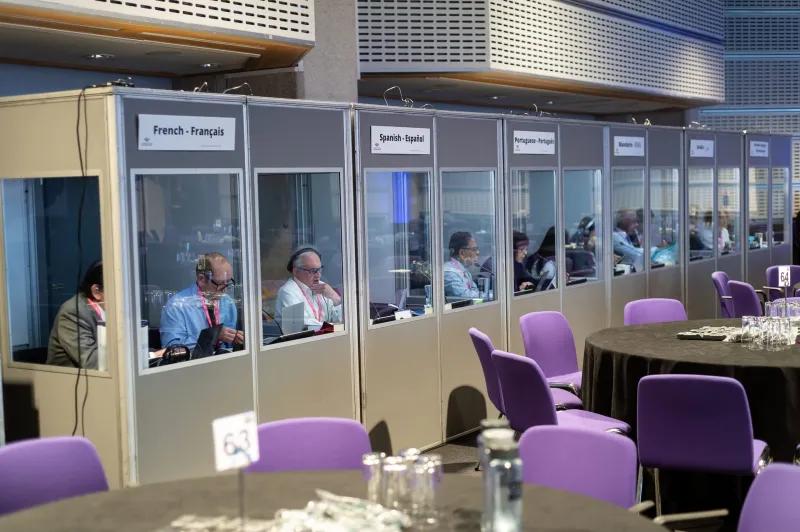
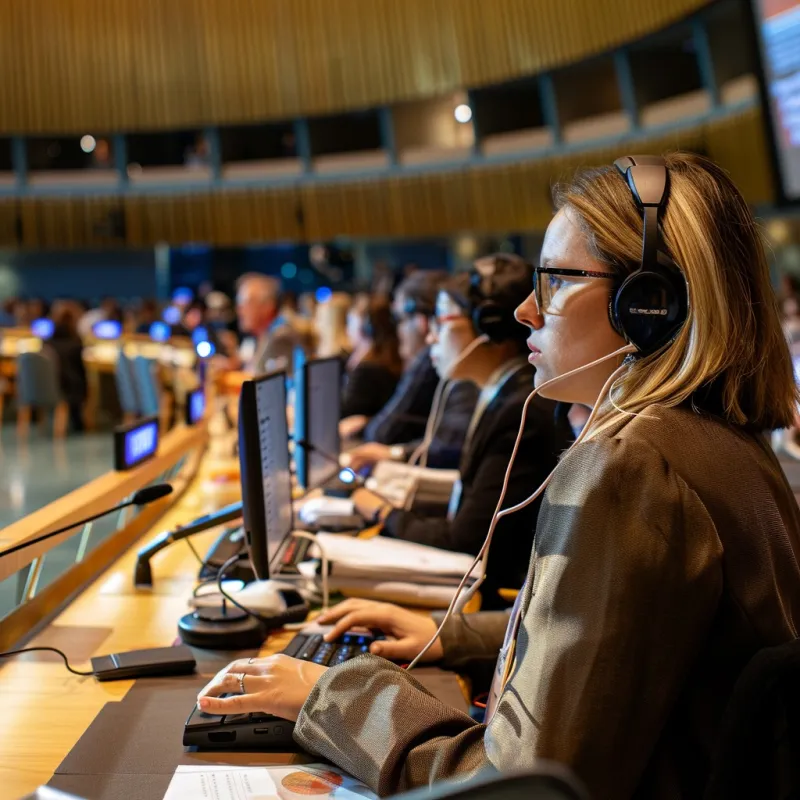
Photo: business interpreter simultaneous translation conference meeting, via mlkb1hjyuleh.i.optimole.com
When American companies host international counterparts, the first line items on the budget are usually venue, travel, and hospitality. Increasingly, the scarcest resource isn't ballroom space or catering — it's a qualified professional who can move fluently between English and Mandarin, Portuguese, or Arabic in a high-stakes negotiation.
The shortage has become one of the more under-discussed friction points in global commerce. As summits held in Atlanta, Chicago, and Dallas draw ever-larger foreign delegations, the pool of vetted on-site interpreters has thinned, and the ripple effects are now showing up on corporate org charts.
A Market That Moved Faster Than the Talent
The arithmetic is unforgiving. American-hosted business conferences have expanded their international programming significantly over the past three years, while the pipeline of certified conference interpreters — professionals trained in simultaneous translation, industry terminology, and the etiquette of the deal room — has remained roughly flat.
Agencies that once filled requests with two weeks' notice now quote lead times measured in months. Rates for a single day of simultaneous interpretation at a major conference can run well into four figures, and that's before travel, preparation materials, and a second interpreter for rotation, which is standard practice for anything longer than a morning session.
For companies accustomed to treating translation as a day-of logistics detail, the math has forced a reckoning.
The In-House Pivot
The response from many US firms has been to stop renting and start building. Rather than competing for a shrinking pool of freelance interpreters, companies are hiring bilingual professionals into existing roles — sales, procurement, client relations — and treating language fluency as a differentiator in the hiring process itself.
The logic is straightforward. An employee who speaks the counterpart's language doesn't just translate; they read the room, catch the hesitation in a negotiation, and sustain relationships between formal meetings. A contracted interpreter leaves when the session ends. An in-house bilingual hire stays for the quarter that follows.
Recruiters report that candidates with verified proficiency in Korean, Vietnamese, or Spanish alongside a functional business skill set are commanding meaningful premiums — particularly in sectors like logistics, medtech, and renewable energy, where international partnerships are the growth engine.
What Capability Actually Costs
Building language infrastructure internally is not inexpensive, but the economics are becoming easier to defend against the alternative.
- Certified interpretation for a multi-day summit engagement: often $2,500–$6,000 per engagement, per language, with limited availability.
- A permanent bilingual hire in a mid-level commercial role: a salary premium in many markets, but capacity that compounds across every meeting, contract review, and follow-up call.
- Structured language training for existing staff: a slower path, but one that builds institutional depth and retention in the process.
The savviest companies are layering all three — hiring bilingual talent where possible, contracting certified interpreters for formal plenary sessions, and investing in training that grows the internal bench over a three-to-five-year horizon.
The Strategic Blind Spot
The deeper risk isn't logistical; it's reputational. Delegations notice when a host company scrambles for language support at the last minute. In markets where relationship-building is measured in years, a clumsy first impression at a summit can quietly close doors that took a decade to open.
Conversely, companies that arrive with native-level capability embedded in their teams signal something no brochure can: that the partnership was worth preparing for properly.
Building the Bench Before the Summit
For executives planning their next international engagement, the practical guidance is consistent among talent advisors: start hiring six to nine months out, verify proficiency through formal assessment rather than a résumé line, and give bilingual staff genuine deal exposure rather than reserving them for greeting duty.
The interpreter shortage is unlikely to resolve quickly. Training pipelines take years, and demand from American-hosted conferences shows no sign of softening. The companies that will navigate the next cycle of global deal-making most smoothly are those that stopped asking "Who can translate for us?" and started asking "Who on our payroll already can?"
In global business, fluency — linguistic and cultural — has quietly become a balance-sheet asset. The organizations that recognize that earliest will be the ones at the table when the next cross-border opportunity lands.